
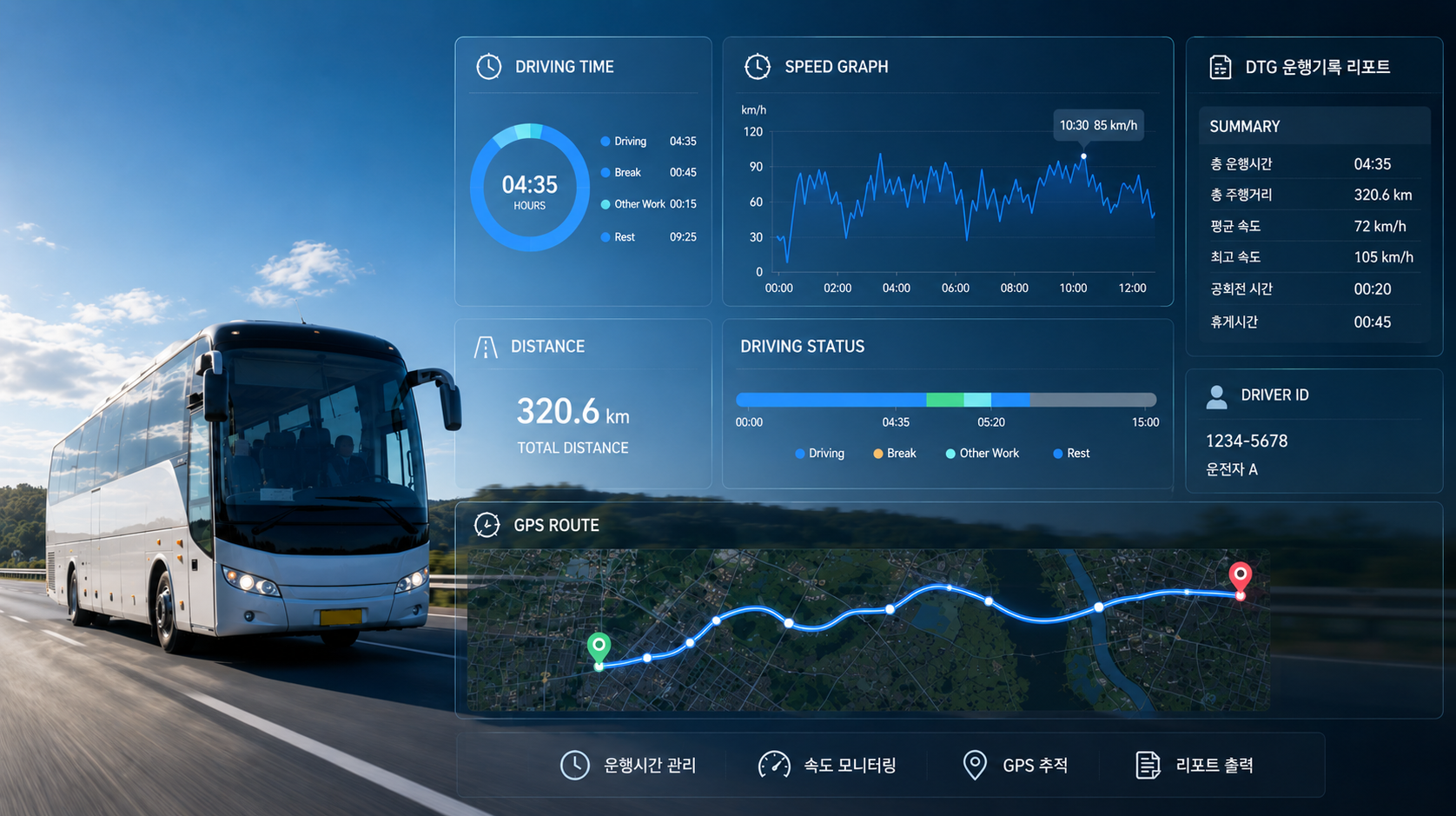
The digital tachograph (DTG) mandate is a familiar topic for business fleet operators, but when we talk to fleet owners, they're often surprisingly stuck with the question
"I thought I was done with DTGs, what else do I need to do?"
"How have we been doing with eTAS submissions?"
"In the event of an accident, does the company still have the data from just before the accident?"
These three questions aren't just curiosities - they're areas where each could lead to millions in fines or increased company liability in the event of an accident.
The DTG obligations don't end at installation; surprisingly few companies are addressing all four obligations together - install, store, submit, and utilize - and the gaps are increasingly becoming the difference between company liability in the event of an accident.
This article will answer each of these questions in turn, laying out the full structure of DTG obligations that business owners should be aware of.
DTG obligations at a glance
(1) Duty to equip: all business vehicles (yellow license plates) (2) Duty to keep data: keep driving records for at least 6 months (3) Duty to submit data: regular submissions to the eTAS system (4) Fines for non-compliance: up to KRW 5 million (1-2-3 aggravated for children's school buses)
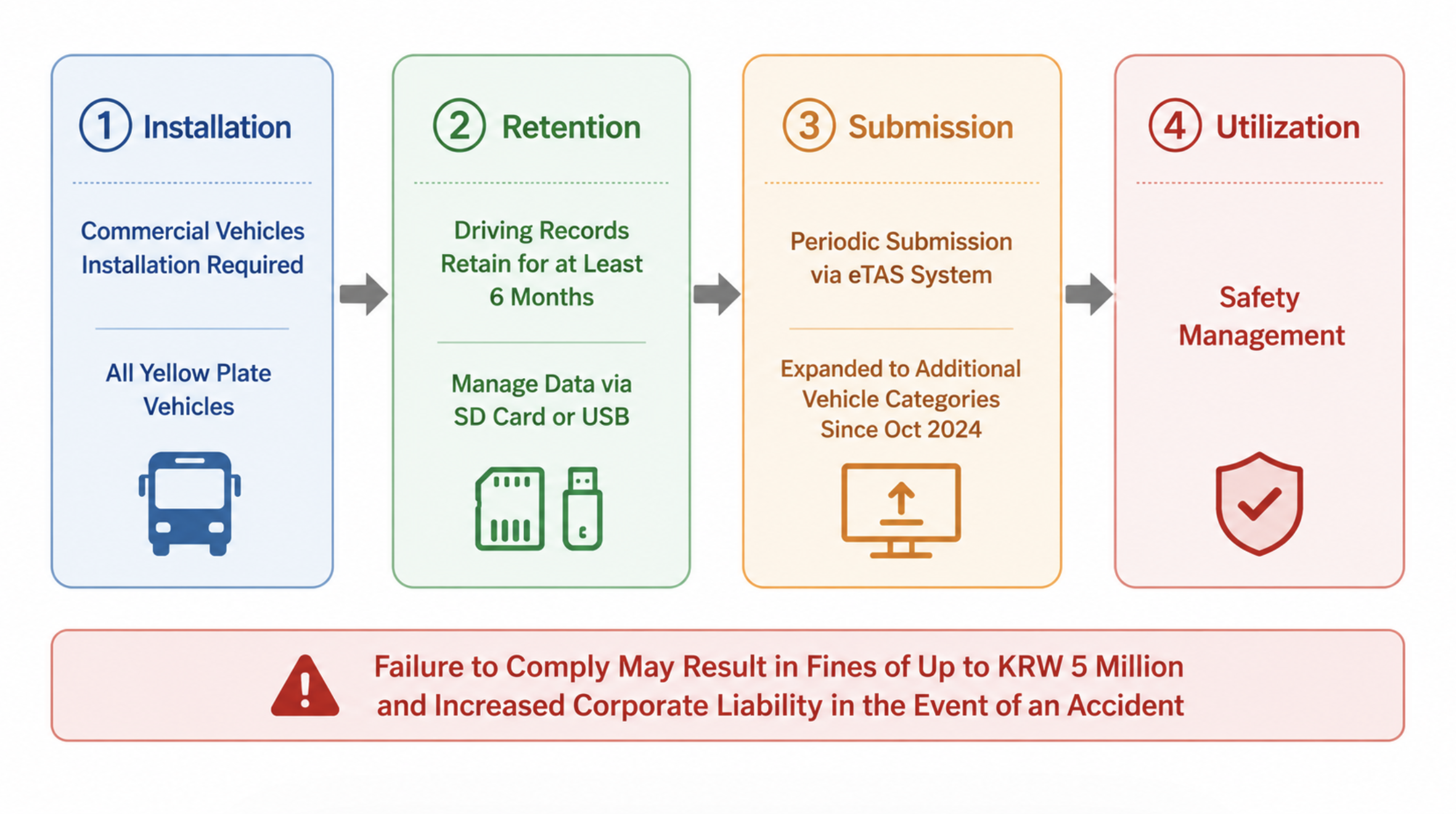
Why DTG obligations are difficult - because installation is not the end of the story
Most business owners perceive DTG as a "once and done" obligation. They install it when they register a new vehicle and then forget about it.
The problem is, that' s notwhat the law requires. Here's why the three questions we raised in the introduction often arise in the real world
- Failure to fulfill obligations despite being equipped: If you are equipped but miss any of the six-month storage obligation, the eTAS periodic submission obligation, or the data utilization obligation, you will be subject to a fine. And each obligation is charged separately.
- Lack of awareness of the 2024 mandate expansion: Beginning in October 2024, there is a new obligation to submit eTAS for heavy goods vehicles and towable specialty vehicles. Many companies subject to the new obligation are unaware of this change.
- Decisive impact of lack of data in the event of an accident: In the event of an accident, if the company does not have the data from the trip immediately prior to the accident, it will be used as evidence of a breach of duty of care, increasing the company's liability. DTG is not just a recorder, it is an asset that protects the company in the event of an accident.
This article answers those three questions in turn.
What is a DTG?
A digital tachograph (DTG) is a device that automatically records a car's speed, RPM, brakes, GPS position, bearing, acceleration, distance traveled, and traffic accident circumstances in an electronic memory.
The legal basis is Article 55 of the Traffic Safety Act and Article 29-2 of the Enforcement Regulation of the same Act,which defines the standards and functions of tachographs.
Differences from analog odometers
| Classification | Analog odometers | Digital tachograph (DTG) |
|---|---|---|
| Recording method | Needle on a logbook | Electronic automatic recording |
| Record items | Speed, distance traveled, time traveled | Speed-RPM-GPS-Acceleration-Brake, etc. |
| Daily management | Driver replaces logbook daily | Auto-save |
| Analyze | Visual verification | Utilize eTAS (electronic logbook analysis system) |
| Accident analysis | Limited | Detailed analysis of data just before an accident |
DTG is not just a recording device, but an instrument that can objectively analyze drivers' risky driving habits and play a crucial role in determining the cause of an accident.
Are my company vehicles subject to DTG mandate?
Mandatory installation - all business vehicles
The Traffic Safety Act requires the following vehicles to be equipped with DTGs
| Vehicle type | Mandatory installation | Remarks |
|---|---|---|
| Business buses and taxis | Newly registered vehicles after January 1, 2011 | Existing vehicles have until Dec. 31, 2012, then mandatory |
| Business cargo vehicles and private taxis | Newly registered vehicles after January 1, 2011 | Existing vehicles have until Dec. 31, 2013, to comply |
| Children's school buses | Newly registered vehicles on or after January 1, 2021 | Mandatory for existing vehicles after a moratorium until Dec. 31, 2022 |
Virtually all yellow license plates on business vehicles are required to have DTGs.
Who is subject to periodic submissions - expanded in 2024
Apart from the installation obligation, there are vehicles that are obligated to periodically submit their driving records to the eTAS (Driving Record Analysis System) of the Korea Transportation Safety Institute.
| Vehicle Type | Submission obligation starts | Basis |
|---|---|---|
| Local buses | Existing | Enforcement Decree of the Transportation Safety Act |
| Children's school buses | 2021.1.1 | Amendment to Article 55 of the Traffic Safety Act |
| Large cargo vehicles with a maximum load of 25 tons | 2024.10.10 | Amendment to the Enforcement Decree of the Traffic Safety Act |
| Large specialty vehicles towing a gross vehicle weight of 10 tons or more | 2024.10.10 | Amendments to the Enforcement Decree of the Traffic Safety Act |
Particularly since October 2024, the periodic submission obligation for oversize goods vehicles has been expanded, so checks are a must for oversize goods operators.
Aneasy point to miss: it's not "end of obligation once you've installed it": installation, storage, and submission are separate obligations, and failure to fulfill each can result in separate fines.
3 obligations beyond mounting
You're not done with DTGs - there are additional obligations that business owners must fulfill, including
Data storage obligation - 6 months or more
Driving record data must be kept for at least six months. This is an area that is often missed if not organized at the company level.
What to keep in mind when archiving:
- SD card and USB memory - Prevent loss or damage.
- Driver replacement - handing over data when the vehicle is sold
- Remain immediately extractable in the event of an accident
- Prevent data tampering and deletion
In particular, in the event of an accident, the company may be judged to have violated its duty of care if the data immediately prior to the accident is missing or corrupted .
Regular Submission Obligation - Utilizing the eTAS System
Driving records must be submitted regularly to the eTAS (Driving Record Analysis System) of the Korea Transportation Safety Institute.
Currently, there are three types of DTGs on the market.
| DTG Type | Automatic submission | Communication fee | Features |
|---|---|---|---|
| General | Not available | None | Requires manual extraction and upload |
| Entry-level | Yes (mobile app) | No | Automated submission with no communication costs |
| Telecom | Yes | Accrual | Enables real-time data transmission |
Since manual submission has a high risk of missing or delayed data, it is recommended that vehicles with regular submission obligations be replaced with communication or entry-level DTGs.
③ Data analysis and utilization obligation - leading to accident prevention
Although not a legal obligation, "utilization of collected driving record data for safety management" is evaluated when determining company liability in the event of an accident.
Utilization includes
- Identifying and training at-risk drivers
- Analyzing accident risk zones
- Calculate driver safety scores
- Improving operational efficiency
If data is hoarded and not utilized, it can be used as a basis for liability in the event of an accident, stating that "the company could have recognized the risk and failed to act."
Fines and additional risks for non-compliance
General business vehicles - up to KRW 5 million
Under Section 65 of the Traffic Safety Act, a fine of up to KRW 5 millionis imposed for the following offenses
- Failure to install DTG
- Failure to submit logbook data
- Violation of data retention obligations
- Tampering with or deleting data
School Buses - Aggravated Fines
For school buses, an aggravated penalty scheme applies.
| Number of violations | Penalty |
|---|---|
| 1st offense | 500 USD |
| 2nd offense | 1 million won |
| 3rd Offense | 1.5 million won |
Additional risks in the event of an incident
Failure to comply with DTG obligations is not just an administrative offense. It also leads to additional risks in the event of an incident, such as
| Risk area | Impact |
|---|---|
| Criminal liability | Evidence of breach of duty of care |
| Insurance treatment | No evidence of accident cause → unfavorable liability ratio |
| Administrative penalties | Decrease in safety management evaluation score |
| Fatal Accident Act | Grounds forviolation of obligation to secure safety and health of management |
DTG data is the most decisive objective source, especially during the accident information collection stage, which we discussed in What employers should do in the event of a truck accident. If this data is missing or inadequate, the accident handling itself will be unfavorable.
Turning DTG obligations into data assets - the role of AI safe driving solutions
DTG is mandatory, but simply fulfilling the obligation will only cost the company money. There is a way touse the same data to prevent accidents, improve operational efficiency, and even score points in safety management assessments.
A.I.Matics' aidis an AI safe driving solution that uses AI cameras installed in vehicles to detectdriver risk behaviors (drowsy driving, distracted driving, cell phone use, etc.) and road hazards (red lights, speeding, pedestrians in blind spots, etc.) in real time, alert drivers as soon as a hazard occurs, and automatically logall events in the admin platform.
In addition to DTG's basic driving recorder functionality, aid simultaneously provides the following
| Functional Area | DTG Basic | AID Integrated Solution |
|---|---|---|
| Driving data recording | ○ | ○ |
| Automatic eTAS submission | (depending on DTG type) | ○ ○ |
| Detection of risky driving behaviors | ×Β | (Drowsiness - Blind Spot - Cell Phone, etc.) |
| Real-time warnings | ×Real-time warning | Real-time warnings |
| Driver Safety Score | ×Real-time warnings | Driver safety scores |
| Automatic preservation of accident footage | (requires separate dashcam) | A.I.Matics |
A.I.Maticsprovides an all-in-one solution that integrates DTG-ADAS-AI DVRs , enabling business owners to fulfill their obligations and manage safety management with a single system.
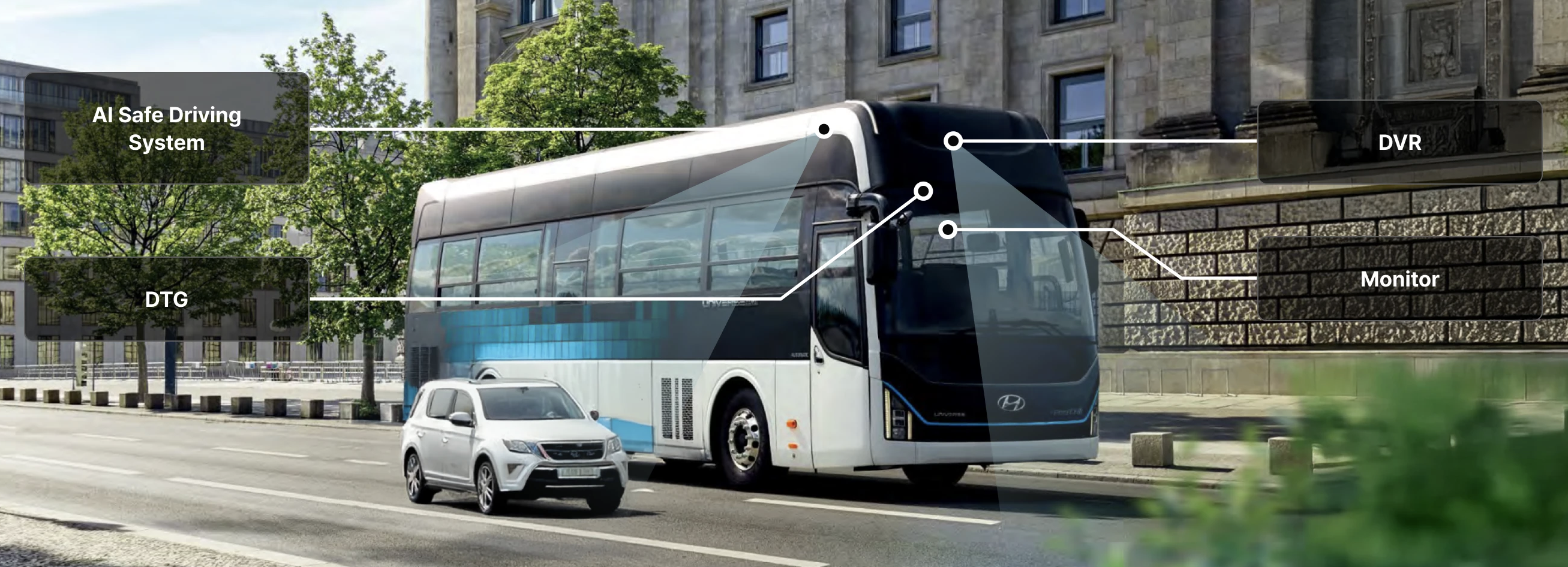
Proven effectiveness - Korea Transportation Safety Authority pilot project
The following are the results of the AI safe driving pilot project conducted by the Korea Transportation Safety Authority for 500 route buses of 13 transportation companies nationwide for 6 months from June to November 2024.
| Risky driving behavior | Effect |
|---|---|
| Drowsy driving | 99.7% reduction |
| Traffic signal violations | 87.6% reduction |
| Distracted driving | 93.4% reduction |
| Centerline crossing | 46.9% decrease |
| Accident rate (combined) | 55% reduction |
Driver Safety Score - 50.9 to 76.9 (51.2% improvement) per 1,000 kilometers driven
If DTG is "recording", AI safe driving solutions are "prevention". When the two are integrated, you can fulfill your obligations and reduce accidents at the same time.
Frequently Asked Questions (FAQ)
H3. Q. Which vehicles are mandated to be equipped with DTG?
A. All business vehicles (yellow license plates) are required to be equipped. Business buses, taxis, and freight vehicles have been mandatory for newly registered vehicles since 2011, and for existing vehicles since 2012-2013 after a moratorium. Children's school buses have been mandatory for new vehicles since January 2021, and for existing vehicles since December 2022 after a moratorium.
H3. Q. Once I've installed DTG, is my obligation over?
A. No. There are three additional obligations in addition to the installation. (①Keeping driving record data for at least 6 months, ②Regular submission to the eTAS system (for eligible vehicles), and ③Safety management through data analysis and utilization. Failure to fulfill each obligation may result in a separate fine.
H3. Q. Which vehicles are required to submit eTAS periodically?
A. Route buses, children's school buses, and from October 10, 2024, large cargo vehicles with a maximum load of 25 tons and large special vehicles towing a gross vehicle weight of 10 tons or more are subject to the periodic submission obligation. Vehicles subject to the periodic submission obligation are encouraged to use a communication or entry-level DTG.
H3. Q. What is the penalty for not installing and submitting a DTG?
A. For general business vehicles, a fine of not more than KRW 5 millionis imposed according to Article 65 of the Traffic Safety Act. Children's school buses are fined 500,000 won for the first offense, 1 million won for the second offense, and 1.5 million won for the third offense in a weighted system.
H3. Q. Can I just keep the DTG data and not utilize it?
A. The legal obligation is to store and submit the data. However, in the event of an accident, "did the company utilize the collected data for safety management" will be evaluated to determine whether the company fulfilled its safety management obligations. Failure to utilize the data can be a basis for liability on the grounds that "the company could have recognized the risk and failed to take action," so it is practically necessary to do so.
H3. Q. What is the difference between DTG and AI dashcam/ADAS?
A. DTG is a device that records vehicle operation records (speed, GPS, brakes, etc.). Dash cameras record video, and ADAS warns of lane departure, frontal collision, etc. AI safe driving solutions integrate these three to detect and warn about driver behavior (drowsiness, distracted driving, handheld phone, etc.) in real time and automatically submit eTAS. An integrated solution is recommended in the future.
Wrapping up - fulfilling DTG obligations is just the beginning
To summarize everything we've talked about so far in one line
Equipping DTGs is the beginning of your obligation, not the end. The storage, submission, and utilization must be systematically managed to avoid administrative risks and, more importantly, to score points in accident prevention and safety management assessments.
While the law requires "keeping records", the market demands "proving safety with data". More and more companies are doing both at the same time, and this gap will have a decisive impact on future bids, contracts, and evaluations.
Have you checked your company's DTG obligations?
Check how many of the following five items you are confident you are fulfilling.
| Number | Checked | Status |
|---|---|---|
| 1 | Is the entirebusiness fleet equipped with DTGand in good working order? | ⬜ |
| 2 | Are logbooks systematically kept for at least 6 months? | ⬜ |
| 3 | Are eTAS submissions for vehicles subject to periodic submissions made without omissions? | ⬜ |
| 4 | Are DTG data being utilized for driver safety management and identification of risky driving? | ⬜ |
| 5 | In the event of an accident, is it possible to immediately extract DTG data immediately before the accident? | ⬜ |
If you have fewer than three "yes" answers, it's likely that your DTG obligations are only a formality. Fulfilling your obligations is also your company's protection in the event of an accident.
Get a DTG-AI Safe Driving Integration Solution Consultation
This article is for general information purposes only. Specific obligations and penalty standards may vary depending on the type of vehicle and jurisdiction, so please contact the Korea Transportation Safety Authority or the local government for more information.

